
Current Projects
Brainstorming Sessions
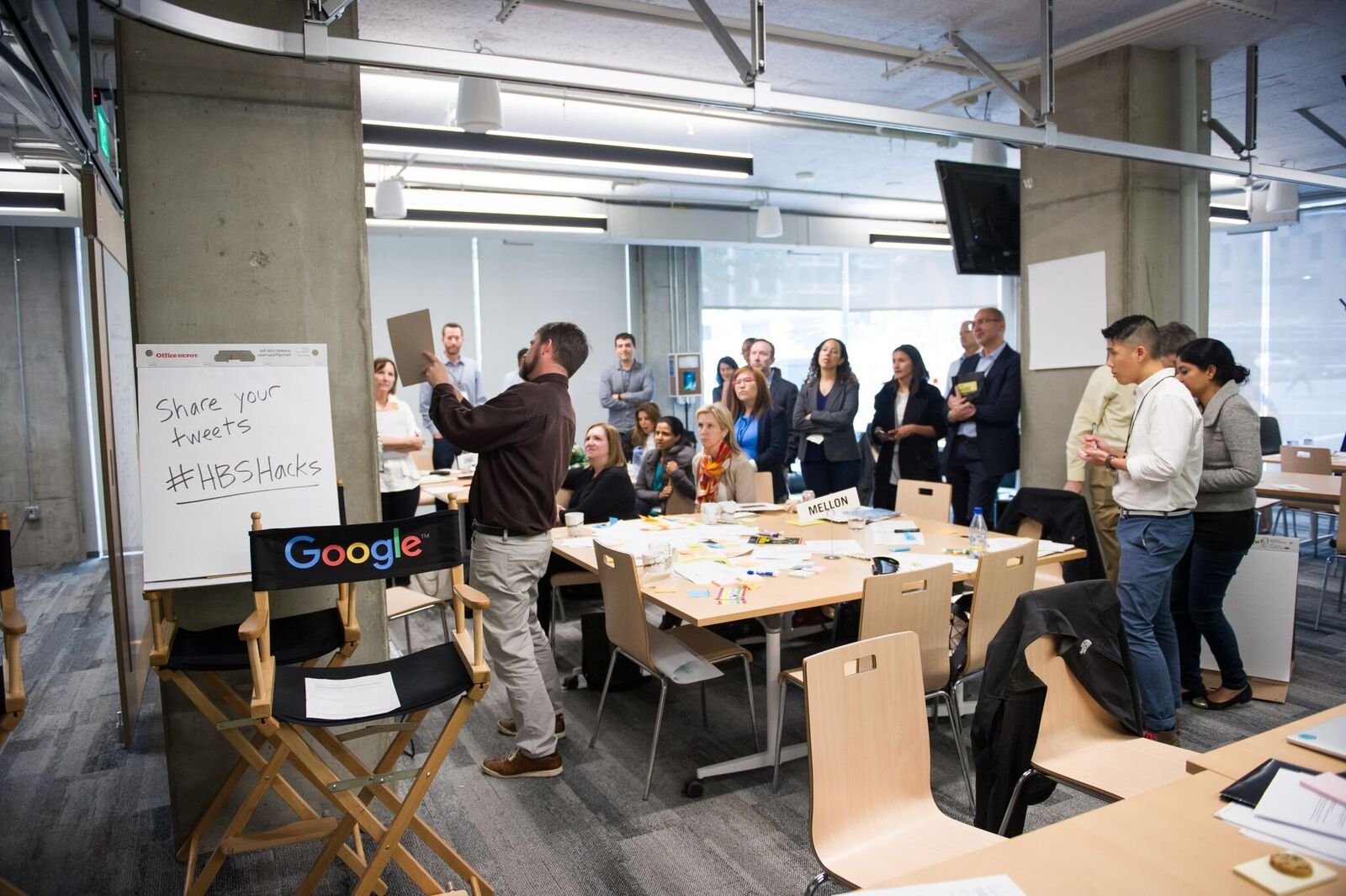
Brainstorming sessions are 90-min meetings focused on solving a specific issue or generating ideas involving 4-8 HBS alumni with targeted skills and interests who can help the nonprofit organization.
Wednesday, Sep 16 - Virtual
12:00pm - 1:30pm Pacific
Community Cycles of California
Community Cycles of California (CCofCA) is a San Jose–based nonprofit workforce development program and social enterprise bike shop that helps people facing barriers to employment develop the skills needed to secure living-wage jobs. Its bike shop provides hands-on business and technical training while also supporting the community through free bicycles and repairs. CCofCA is preparing to launch a certified California apprenticeship program while navigating significant changes following the loss of its largest grant, including questions around financial sustainability, leadership succession, and whether to remain independent or pursue a potential merger.
Focus Question: What are the key questions Community Cycles of California should be asking as it enters strategic planning and evaluates the best path forward for the organization?
Thursday, Sep 24 - Virtual
12:00pm - 1:30pm Pacific
Art Alliance for Contemporary Glass
Art Alliance for Contemporary Glass (AACG) is a national nonprofit dedicated to championing glass as a major contemporary art form through community-building, education, and philanthropy. Founded more than 30 years ago, AACG has grown to more than 650 member households and offers weekly virtual programming, educational resources, member travel, and philanthropic support to artists, programs, and institutions. Having recently completed a new Strategic Framework, AACG is now preparing to engage its volunteer-led organization in putting the strategy into action.
Focus Question: How can AACG effectively roll out its new Strategic Framework to build organizational buy-in and empower its committees to take ownership of specific strategies and develop actionable tactics?
Thursday, Oct 1st - Virtual
12:00pm - 1:30pm Pacific
Omena
Founded in Madagascar in 2019, Omena is a nonprofit dedicated to breaking the cycle of verbal, emotional, and psychological abuse by teaching emotional literacy before harm escalates. Through evidence-based education, training, and community partnerships, Omena equips children, caregivers, educators, workplaces, and communities with the skills to recognize, understand, and respond to emotions in healthier ways. Its model has been implemented across schools and communities in Madagascar, reaching more than 20,000 families, and is now being adapted through pilot programs in Rhode Island. As Omena expands internationally, it is working to build a sustainable model that combines nonprofit programming with earned-revenue opportunities to make emotional literacy accessible to communities around the world.
Focus Question: What growth strategy should Omena pursue over the next three to five years to maximize long-term impact?
Friday, Oct 2nd - In Person
Castlemont High School, 8601 MacArthur Blvd Bldg. 300, Oakland, CA 94605
11:30pm - 1:00pm Pacific
BUILD
BUILD.org is a national nonprofit that prepares youth in under-resourced communities for career success by integrating entrepreneurship education into schools. Through curriculum, teacher coaching, and connections to business professionals, BUILD helps students develop entrepreneurial mindsets, career skills, and supportive adult relationships. Founded in East Palo Alto in 1999, BUILD has grown to reach students nationally, with nearly 2,500 students participating in its core programming last year. As BUILD integrates its programming more deeply into the school day, student participation has increased significantly—creating a growing need for volunteers who can serve as business team coaches.
Focus Question: How can BUILD redesign its volunteer recruitment and engagement strategy to attract at least 50 business team coaches willing to participate in three or more coaching sessions between February and May 2027?
Additional note: this is an in-person brainstorming session. There is also an optional volunteer opportunity from 10:15am to 11:30am for Personal Pitch and Career Panel with BUILD students, and an optional post-session lunch and networking opportunity with BUILD Regional Leadership and Harvard Club of SF Alumni from 1pm - 2pm.
Consulting Projects
Consulting Projects are three-four month strategic consulting engagements with a group of 3-5 alumni who conducts a deep dive to tackle a broad challenge or opportunity. Meeting dates and formats are decided by the team throughout the engagement.
Kickoff: September / October
Duration: 4 month consulting project
Confidential International Education Nonprofit
A rapidly growing international nonprofit provides education, leadership development, and pathways to opportunity for girls and young women facing significant barriers to education. The organization currently operates across multiple countries and legal entities and is transitioning from a founder-led start-up into a more mature, scalable organization. As it prepares for continued international expansion, its internal governance structures have not kept pace with its growth, creating a need for clearer decision-making authority, stronger Board structures, and a more cohesive model for managing relationships across country entities. Additional details about the organization and its work are intentionally being kept confidential due to the sensitive nature of its programs.
Project with Community Partners: design and refine an international governance framework that can support its next stage of growth. Building on substantial work already completed internally, the team will review and validate existing materials, gather input from Board members and staff, and recommend an international governance model, decision-making authority matrix, and Board roles and responsibilities framework.
Kickoff: September/ October
Duration: 4 month consulting project
Breakthrough Collaborative
Breakthrough Collaborative is a national education nonprofit that works with traditionally underserved students to achieve post-secondary success while developing the next generation of educators and advocates. Through a network of 25 affiliates operating 43 sites across 17 states, Breakthrough provides more than six years of college-access support to students and offers an intensive Teaching Fellowship that gives aspiring educators hands-on classroom experience, training, and coaching. In Summer 2025 alone, Breakthrough served more than 8,500 K–12 students and 1,000 Teaching Fellows, and its national network includes more than 40,000 alumni.
Project with Community Partners: Breakthrough is seeking to explore a sustainable, mission-aligned earned-revenue model around its teacher pipeline and related assets. Potential areas of work include assessing comparable teacher placement and partnership models, identifying promising buyers and payers such as school districts and higher-education institutions, developing value propositions and pricing models, evaluating unit economics and revenue potential, and designing pilots and a roadmap for implementation. The specific scope and deliverables are intentionally flexible and can be refined based on the interests and expertise of the HBSCP volunteer team, with the understanding it would be around earned revenue. .
Kickoff: September/ October
Duration: 4 month consulting project
Cancer Support Community San Francisco Bay Area
Cancer Support Community San Francisco Bay Area (CSC) provides free, comprehensive support to people impacted by cancer and their loved ones throughout the Bay Area. Its evidence-based programs include counseling, support groups, nutrition and exercise programs, patient education, emergency financial assistance, and specialized services for teens and children. Offered both in person and virtually, and in English and Spanish, CSC’s programs serve more than 2,000 participants and are designed to help patients and families navigate treatment, improve quality of life, and ensure that no one faces cancer alone.
Project with Community Partners: CSC is entering a significant period of transition as it prepares to open a new Cancer Support Center in January 2027 and looks ahead to its next five-year strategic plan. The organization is seeking HBS Community Partners’ support with the strategic planning process, including environmental scans and benchmarking, research on emerging trends in supportive cancer care, stakeholder input, and assessment of organizational strengths and opportunities. Given the engagement timeframe, the project may focus on defining the strategic direction and planning framework rather than completing the full strategic plan.
Kickoff: September/ October
Duration: 4 month consulting project
GRIP Training Institute
GRIP Training Institute is an Oakland-based nonprofit that works to transform violence and suffering into opportunities for learning, healing, and growth. Through trauma-informed and restorative justice programs, GRIP helps incarcerated and formerly incarcerated people develop accountability, emotional intelligence, empathy, and leadership skills while addressing the root causes of violence. Its flagship year-long Guiding Rage Into Power (GRIP) program operates in seven California prisons and serves approximately 650 incarcerated people annually. Since 2012, more than 2,200 people have graduated from the program, including over 1,000 who have subsequently been released from prison, with a reported recidivism rate of 1.27%.
Project with Community Partners: GRIP is seeking support to develop a sustainable funding model as it prepares for a changing philanthropic environment and the expiration of a significant grant in 2027. The project will explore two potential paths to greater financial sustainability: identifying and evaluating mission-aligned earned-revenue opportunities and developing a stronger strategy for attracting major investments from high-net-worth individuals in California.
Kickoff: September/ October
Duration: 4 month consulting project
ISKME
The Institute for the Study of Knowledge Management in Education (ISKME) is an independent education nonprofit dedicated to making learning and knowledge sharing more participatory and open for all. Founded in 2002, ISKME works with schools, universities, libraries, policymakers, and other education organizations to expand access to high-quality educational resources through research, training, and open knowledge infrastructure. Its flagship platform, OER Commons, reaches more than 8.5 million unique visitors annually and provides access to over 100,000 openly licensed and public-domain educational resources. ISKME also develops and manages open digital libraries and works globally to advance innovative teaching, learning, and open education practices.
Project with Community Partners: ISKME is seeking support to develop a communications and marketing strategy for The Ark, its new digital library designed to preserve publicly funded and openly licensed educational resources that have disappeared from the web or are at risk of being lost. Already containing nearly 17,000 resources, The Ark aims not only to preserve this content but also to put it back into active circulation among educators, students, and researchers. The project will focus on building awareness and increasing adoption and engagement, including identifying priority audiences, refining messaging and positioning, and determining the most effective channels and activities to reach users. The resulting strategy will also provide insights that ISKME can apply to OER Commons and its broader communications efforts.
Kickoff: September/ October
Duration: 4 month consulting project
Learning Equality
Learning Equality is an education nonprofit that expands access to high-quality learning for students and educators with limited or no internet connectivity. Its flagship platform, Kolibri, is a free, open-source learning platform that enables schools, refugee settlements, prisons, and community centers to deliver digital educational content entirely offline. Together with Kolibri Studio and the Kolibri Library—which includes more than 200,000 resources in 173 languages—Learning Equality’s tools have reached more than 13 million learners across 220+ countries and territories. The organization also provides implementation support, teacher training, curriculum alignment, and technical assistance to partners deploying Kolibri at scale.
Project with Community Partners: a project to assess the potential for scalable earned revenue and develop a go-to-market strategy, beginning with its Kolibri Data Portal. The Portal has potential commercial opportunities both for the technology itself and for aggregated usage data that may be valuable to content providers, funders, and education ministries. Importantly, the organization wants to rigorously test whether a viable business opportunity exists, including identifying conditions under which it should not pursue or scale the model.
Kickoff: September/ October
Duration: 4 month consulting project
National Association for Family Child Care (NAFCC)
The National Association for Family Child Care (NAFCC) is the only national membership organization dedicated exclusively to strengthening and advancing the family child care profession. Serving educators and partners across all 50 states, NAFCC supports home-based child care providers through advocacy, accreditation, professional learning, leadership development, research, and strategic partnerships. The organization works to elevate educator voices and strengthen the role of family child care within the nation’s early childhood system, supporting thousands of educators who in turn serve millions of children and families.
Project with Community Partners: a project to assess the landscape of family child care data, research, and policy information and develop a blueprint for positioning NAFCC as a trusted source for the field. Currently, relevant information is fragmented across entities. The project will provide high-level recommendations for creating a centralized repository of key family child care data and statistics. The team will also explore how this information could be translated into useful resources for policymakers, educators, funders, partners, and other organizations working across the family child care ecosystem.
Kickoff: September/ October
Duration: 4 month consulting project
North Beach Citizens
North Beach Citizens (NBC) is a San Francisco nonprofit that helps individuals experiencing homelessness and extreme poverty move toward lasting stability. Founded in 2001, NBC provides a relationship-based, low-barrier model of support that includes housing stabilization, individualized case management, food assistance, benefits navigation, connections to health and mental health services, and meaningful work opportunities. Its Kearny Street Resource Center serves as a community hub for approximately 720 individuals annually, many of whom are older adults or people living with disabilities. NBC maintains approximately a 90% housing stabilization rate and distributes more than 230,000 pounds of food and 44,000 meals each year.
Project with Community Partners: develop a strategic framework and actionable roadmap for its Compassion in Action Campaign, a multi-year effort to raise approximately $6.5 million by 2029 to strengthen the organization’s financial foundation, support strategic program growth, and reduce long-term debt. The project will assess NBC’s campaign strategy, revenue model, fundraising capacity, and organizational infrastructure; recommend priorities and sequencing; and explore how Board engagement and donor development can support long-term success.
Kickoff: September/ October
Duration: 4 month consulting project
Renaissance Entrepreneurship Center (REC)
Renaissance Entrepreneurship Center is a Bay Area nonprofit that empowers individuals facing barriers to economic opportunity to start, strengthen, and grow sustainable businesses. For more than 40 years, Renaissance has provided practical business training, individualized consulting, access-to-capital support, mentorship, and networking opportunities that help entrepreneurs generate income, build assets, and create jobs. In 2025, Renaissance served more than 1,900 people, supporting the creation and growth of over 1,100 businesses. Since its founding, the organization has served more than 45,000 Bay Area residents who have started or grown over 23,000 businesses and created nearly 33,000 jobs.
Project with Community Partners: develop a comprehensive succession and leadership transition plan as well as future-state organizational structure. Its longtime CEO prepares to step back after 27 years of leadership. With an internal successor already identified and Board support for the transition, the project will focus on creating a structured pathway that preserves institutional knowledge, minimizes disruption, and positions the organization and its new leadership for long-term success.
Kickoff: September/ October
Duration: 4 month consulting project
The Concord Consortium
The Concord Consortium is a nonprofit research and development organization that has pioneered technology-based STEM learning for more than 30 years. Its mission is to improve STEM teaching and learning through technology, combining learning sciences research, digital platform development, and classroom practice. Its open-access ecosystem includes nearly 700 STEM simulations, activities, and assessments, as well as CODAP, a widely used web-based platform for learning with data. Concord’s resources have reached more than 3.5 million learners and 100,000 educators across all 50 states and more than 120 countries, with a particular commitment to keeping its educational resources freely accessible to teachers and students.
Project with Community Partners: develop a commercialization and earned-revenue strategy for its portfolio of digital assets while preserving free access for educators and learners. With 81% of its current funding coming from government grants and contracts, Concord is looking to diversify its revenue base. The project will assess its portfolio and prioritize one or two promising opportunities, identifying target customers, value propositions, market potential, and appropriate pricing and revenue models.
Kickoff: September/ October
Duration: 4 month consulting project
Wu Yee Children's Services
Wu Yee Children’s Services is a San Francisco nonprofit that creates opportunities for children to be healthy, families to thrive, and communities to be strong. Founded nearly 50 years ago in Chinatown, Wu Yee has grown into San Francisco’s largest provider of Head Start and Early Head Start and today serves more than 8,000 children, families, and child care providers annually. Its work spans three interconnected areas: early learning and supportive services for children, family access and engagement, and workforce development and education for child care providers. Through this integrated approach, Wu Yee supports children’s development and school readiness while strengthening families and the broader early childhood education system.
Project with Community Partners: As Wu Yee approaches its 50th anniversary in 2027, the organization seeks to develop a clear and compelling organizational positioning and messaging framework that better communicates the breadth and impact of its work. With only approximately 2% of its funding currently coming from private philanthropy, stronger messaging is also an important foundation for diversifying its donor base. The project will assess Wu Yee’s current messaging and stakeholder perspectives, clarify its differentiation and core narrative, and translate that strategy into a practical communications toolkit.